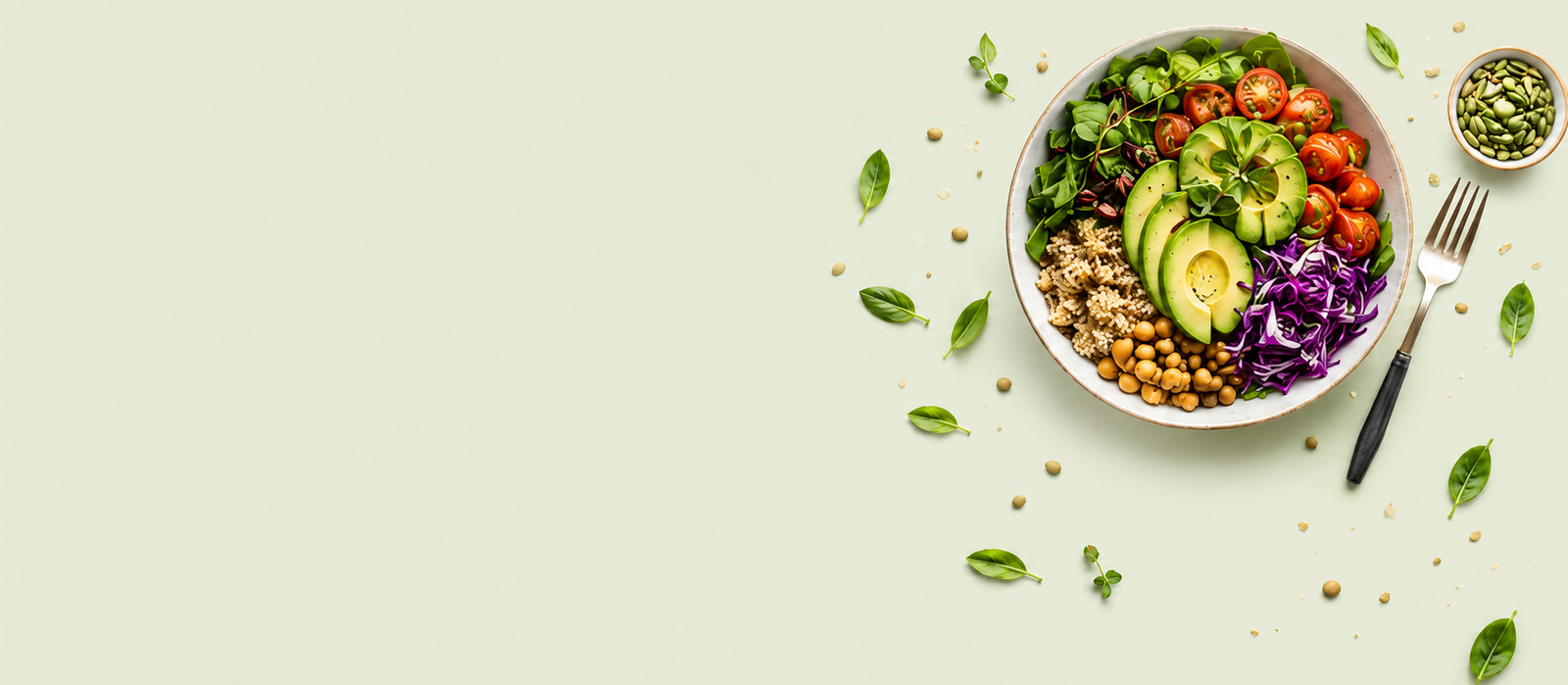
Eating for gut health does not have to mean living on plain salads or giving up the foods you enjoy. Some of the most useful ingredients for a gut-friendly eating pattern are wonderfully ordinary: oats, lentils, beans, vegetables, fruit, whole grains, fermented foods, seeds, herbs, and tofu.
This collection brings together the 10 recipes featured in the provided gut-health infographic: Overnight Oats with Berries, Lentil Soup with Turmeric, Quinoa Salad with Lemon & Herbs, Chickpea & Avocado Bowl, Sauerkraut & Veggie Bowl, Sweet Potato & Black Bean Bowl, Miso Soup with Tofu, Chia Pudding with Fruit, Roasted Veggie & Hummus Bowl, and Apple Cinnamon Quinoa Porridge.
The recipes below are all vegetarian, and every recipe is written specifically for 2 people. You will find practical ingredient measurements, approximate serving weights, preparation and cooking times, protein estimates, nutrition information, ingredient benefits, substitutions, storage guidance, meal-prep ideas, common mistakes, and useful cooking notes.
One important point before getting started: “gut health” is not one-size-fits-all. Foods that feel wonderful for one person can cause bloating or discomfort for another. The recipes emphasize fiber-rich plant foods, fermented ingredients, whole grains, legumes, seeds, and vegetables, but you can adjust portions and ingredients according to your own tolerance.
Nutrition note: Nutrition figures are estimates based on standard ingredients and the quantities listed. Actual values vary with brands, produce size, preparation methods, and substitutions. They are not laboratory-tested values.
1. Overnight Oats with Berries
Overnight oats are one of the easiest breakfasts to prepare ahead of time. Instead of cooking oats in the morning, you soak them overnight with milk or yogurt until they become soft and creamy.
The combination of oats, chia seeds, berries, and yogurt provides a useful mixture of carbohydrates, fiber, protein, and healthy fats. The texture is naturally soft, making it a particularly convenient breakfast when you prefer something that requires almost no morning preparation.
Recipe at a Glance
- Servings: 2
- Serving Size: approximately 300 g
- Prep Time: 10 minutes
- Chill Time: 6–8 hours
- Cook Time: None
- Total Time: about 6 hours 10 minutes
- Calories: approximately 380 per serving
- Protein: approximately 17 g per serving
- Method: No-cook, refrigerated
Ingredients
- 100 g rolled oats (about 1 cup)
- 240 ml milk of choice (1 cup)
- 120 g plain Greek yogurt (about 1/2 cup)
- 20 g chia seeds (about 2 tablespoons)
- 150 g mixed berries
- 1 tablespoon honey or maple syrup, optional
- 1/2 teaspoon vanilla extract
- Pinch of cinnamon
- 30 g chopped walnuts, optional
How to Make It
- Divide the oats and chia seeds between two jars or containers.
- Add the milk, Greek yogurt, vanilla, and cinnamon.
- Stir thoroughly, making sure there are no dry pockets of chia seeds or oats at the bottom.
- Add approximately three-quarters of the berries and gently fold them through.
- Cover and refrigerate for at least 6 hours, preferably overnight.
- In the morning, stir each portion. If the oats have become too thick, add 1–2 tablespoons of milk.
- Top with the remaining berries and walnuts before serving.
How to Know It Is Ready
The oats should be soft and creamy rather than watery. The chia seeds should have absorbed liquid and created a lightly thickened texture.
Why These Ingredients Are Useful
Oats provide soluble fiber, including beta-glucan.
Chia seeds contribute fiber, plant-based omega-3 fats, and minerals.
Berries provide fiber and naturally occurring plant compounds.
Greek yogurt adds protein and, when it contains live cultures, can contribute beneficial microorganisms to the diet.
Substitutions
- Use soy milk for a higher-protein dairy-free option.
- Use dairy-free yogurt if needed.
- Replace berries with diced apple, pear, peach, or banana.
- Use ground flaxseed instead of chia seeds, although the texture will be slightly different.
Storage
Keep refrigerated and consume within approximately 2–3 days for the best texture and freshness.
Common Mistake
Adding too many chia seeds without increasing the liquid can turn overnight oats into a very thick paste. If this happens, simply loosen them with additional milk.
2. Lentil Soup with Turmeric
Lentil soup is a classic example of a meal that manages to be inexpensive, filling, nourishing, and deeply comforting at the same time.
Lentils provide plant-based protein and fiber, while vegetables create the base of the soup. Turmeric contributes earthy flavor and color rather than turning the dish into an overpowering spice mixture.
Recipe at a Glance
- Servings: 2
- Serving Size: approximately 400 g
- Prep Time: 15 minutes
- Cook Time: 35 minutes
- Total Time: 50 minutes
- Calories: approximately 350 per serving
- Protein: approximately 18 g per serving
- Method: Stovetop
Ingredients
- 120 g dry red or brown lentils, rinsed
- 1 tablespoon olive oil (14 g)
- 100 g onion, finely chopped
- 100 g carrot, diced
- 80 g celery, diced
- 2 garlic cloves, minced
- 1 teaspoon ground turmeric
- 1/2 teaspoon ground cumin
- 500 ml vegetable broth
- 250 ml water
- 150 g diced tomatoes
- 80 g spinach
- 1 tablespoon lemon juice
- 1/2 teaspoon black pepper
- Salt to taste
How to Make It
- Heat the olive oil in a medium pot over medium heat.
- Add onion, carrot, and celery. Cook for 6–8 minutes until the vegetables soften.
- Add garlic, turmeric, and cumin. Stir for approximately 30 seconds.
- Add rinsed lentils, tomatoes, vegetable broth, water, and black pepper.
- Bring the mixture to a boil, then reduce to a gentle simmer.
- Cook uncovered or partially covered for approximately 25–30 minutes, stirring occasionally.
- The soup is ready when the lentils are tender and the vegetables can easily be pierced with a fork.
- Stir in spinach during the final 2–3 minutes.
- Turn off the heat and add lemon juice. Taste and adjust salt.
Gut-Friendly Ingredient Notes
Lentils provide fiber and plant protein. Vegetables contribute additional fiber and micronutrients. Turmeric gives the soup its characteristic earthy flavor and color.
If you are not accustomed to eating large portions of legumes, start with a comfortable portion and increase gradually rather than forcing a large serving.
Storage
Refrigerate for 3–4 days in a sealed container. Freeze individual portions for longer storage.
Reheating
Warm gently on the stovetop. Add a splash of water or broth if the soup has thickened considerably.
3. Quinoa Salad with Lemon & Herbs
This quinoa salad is fresh, bright, and substantial enough to function as a complete vegetarian lunch. Lemon keeps the flavor lively while herbs prevent the dish from becoming another bland grain bowl.
Recipe at a Glance
- Servings: 2
- Serving Size: approximately 350 g
- Prep Time: 15 minutes
- Cook Time: 15 minutes
- Total Time: 30 minutes
- Calories: approximately 420 per serving
- Protein: approximately 14 g per serving
- Method: Stovetop
Ingredients
- 100 g dry quinoa
- 200 ml water or vegetable broth
- 100 g cucumber, diced
- 120 g cherry tomatoes, halved
- 60 g red bell pepper, diced
- 30 g parsley, chopped
- 15 g fresh mint, chopped
- 30 g feta cheese, crumbled
- 1 tablespoon olive oil (14 g)
- Juice of 1 lemon
- 1/2 teaspoon black pepper
- Salt to taste
How to Make It
- Rinse quinoa thoroughly under cold water.
- Combine quinoa and water or broth in a saucepan.
- Bring to a boil, reduce the heat, cover, and simmer for approximately 12–15 minutes.
- Turn off the heat and let the quinoa stand covered for 5 minutes.
- Fluff with a fork and allow it to cool for several minutes.
- Combine cucumber, tomatoes, bell pepper, parsley, and mint in a large bowl.
- Add cooled quinoa and feta.
- Whisk olive oil, lemon juice, black pepper, and salt together.
- Pour the dressing over the salad and toss gently.
The Important Detail
Do not dress the salad while the quinoa is extremely hot. Letting it cool first helps preserve the fresh texture of the vegetables and prevents the herbs from wilting immediately.
Benefits
Quinoa provides plant protein and fiber. The vegetables contribute additional fiber and micronutrients, while olive oil adds unsaturated fat.
Storage
Refrigerate for up to 3 days. For the freshest texture, add herbs shortly before serving if preparing it well in advance.
4. Chickpea & Avocado Bowl
This bowl combines creamy avocado with hearty chickpeas, crisp vegetables, and a bright lemon dressing. It works particularly well for lunch because it requires little cooking and can be assembled quickly.
Recipe at a Glance
- Servings: 2
- Serving Size: approximately 380 g
- Prep Time: 15 minutes
- Cook Time: None
- Total Time: 15 minutes
- Calories: approximately 470 per serving
- Protein: approximately 13 g per serving
- Method: No-cook
Ingredients
- 240 g cooked chickpeas, drained
- 150 g avocado flesh
- 100 g cucumber, diced
- 120 g cherry tomatoes
- 60 g red cabbage, finely sliced
- 60 g spinach
- 30 g pumpkin seeds
- Juice of 1 lemon
- 1 tablespoon olive oil
- 1/2 teaspoon cumin
- Black pepper to taste
- Salt to taste
How to Make It
- Rinse and drain the chickpeas thoroughly.
- Add spinach, cucumber, tomatoes, cabbage, and chickpeas to two serving bowls.
- Dice the avocado and add it gently so it does not become mashed.
- Mix lemon juice, olive oil, cumin, black pepper, and salt.
- Drizzle the dressing over both bowls.
- Finish with pumpkin seeds immediately before serving.
Why It Is Filling
Chickpeas contribute both protein and fiber. Avocado contributes monounsaturated fat and fiber, while pumpkin seeds provide additional protein, fat, and minerals.
Substitution
White beans can replace chickpeas. The texture will be softer and the flavor slightly milder.
Storage
If preparing ahead, store the dressing separately and add avocado immediately before eating. Once cut, avocado can darken and soften.
5. Sauerkraut & Veggie Bowl
Fermented vegetables such as sauerkraut are a distinctive addition to a balanced diet because fermentation changes the food’s flavor and composition. If you are buying sauerkraut specifically for fermented-food benefits, check the label and choose a refrigerated product that has not been pasteurized after fermentation when appropriate.
This bowl pairs sauerkraut with roasted or lightly cooked vegetables, grains, and a creamy dressing.
Recipe at a Glance
- Servings: 2
- Serving Size: approximately 350 g
- Prep Time: 15 minutes
- Cook Time: 25 minutes
- Total Time: 40 minutes
- Calories: approximately 400 per serving
- Protein: approximately 12 g per serving
- Method: Oven
Ingredients
- 250 g sweet potato, cubed
- 150 g broccoli florets
- 100 g cooked quinoa
- 100 g sauerkraut
- 50 g shredded carrot
- 40 g pumpkin seeds
- 1 tablespoon olive oil
- 1/2 teaspoon smoked paprika
- Black pepper to taste
Dressing
- 60 g plain Greek yogurt
- 1 tablespoon lemon juice
- 1 teaspoon mustard
- 1–2 tablespoons water, as needed
How to Make It
- Preheat the oven to 200°C / 400°F.
- Toss sweet potato and broccoli with olive oil, smoked paprika, and black pepper.
- Roast for approximately 20–25 minutes, turning once halfway through.
- Mix Greek yogurt, lemon juice, mustard, and enough water to create a pourable dressing.
- Divide quinoa between two bowls.
- Add roasted vegetables, carrot, and sauerkraut.
- Drizzle with dressing and finish with pumpkin seeds.
Fermented Food Note
Sauerkraut can be a flavorful way to include fermented vegetables in your diet. However, more is not automatically better. If fermented foods are new to you, a modest serving may be more comfortable than a very large portion.
Sodium
Sauerkraut can be relatively high in sodium, depending on the brand. If sodium intake is a concern, check the nutrition label and adjust the amount accordingly.
6. Sweet Potato & Black Bean Bowl
Sweet potatoes and black beans are an especially useful pairing: the sweet potato brings a soft, naturally sweet base while black beans add protein, fiber, and a savory contrast.
Recipe at a Glance
- Servings: 2
- Serving Size: approximately 400 g
- Prep Time: 10 minutes
- Cook Time: 30 minutes
- Total Time: 40 minutes
- Calories: approximately 450 per serving
- Protein: approximately 16 g per serving
- Method: Oven and stovetop
Ingredients
- 350 g sweet potato, cubed
- 240 g cooked black beans, drained
- 100 g cooked brown rice
- 100 g corn
- 80 g avocado
- 60 g red cabbage
- 1 tablespoon olive oil
- 1/2 teaspoon cumin
- 1/2 teaspoon smoked paprika
- Juice of 1/2 lime
- Black pepper
- Salt to taste
How to Make It
- Preheat the oven to 200°C / 400°F.
- Toss sweet potato with olive oil, cumin, paprika, and black pepper.
- Roast for 25–30 minutes until tender and lightly browned at the edges.
- Warm the black beans and corn in a small pan over medium-low heat.
- Divide cooked rice between two bowls.
- Add roasted sweet potato, warm beans, corn, shredded cabbage, and avocado.
- Finish with lime juice.
Protein Boost
For more protein, increase the black beans or add a spoonful of Greek yogurt. If using Greek yogurt, keep it refrigerated and add it immediately before serving.
Common Mistake
Do not overcrowd the roasting tray. Too many vegetables packed closely together trap steam and prevent the sweet potatoes from developing browned edges.
7. Miso Soup with Tofu
Miso soup is wonderfully simple, but there is one important cooking detail: miso should not be aggressively boiled. Adding it near the end preserves the delicate flavor and makes it easier to control the final seasoning.
Recipe at a Glance
- Servings: 2
- Serving Size: approximately 350 ml
- Prep Time: 10 minutes
- Cook Time: 10 minutes
- Total Time: 20 minutes
- Calories: approximately 180 per serving
- Protein: approximately 12 g per serving
- Method: Stovetop
Ingredients
- 500 ml water
- 15 g dried wakame seaweed
- 150 g firm tofu, cubed
- 60 g mushrooms, sliced
- 50 g spring onions, sliced
- 40 g white or yellow miso paste
- 1 teaspoon grated ginger
- 1 teaspoon sesame seeds, optional
How to Make It
- Place the water and wakame in a saucepan. Let the seaweed hydrate for several minutes.
- Add mushrooms and ginger.
- Bring the soup to a gentle simmer and cook for approximately 4–5 minutes.
- Add tofu and warm for another 2–3 minutes.
- Turn the heat to low.
- Place the miso paste in a small bowl. Add several tablespoons of hot broth and stir until smooth.
- Pour the loosened miso mixture back into the pot and stir gently.
- Add spring onions and sesame seeds.
- Taste before adding salt. Miso itself is salty.
Why Tofu Helps
Tofu provides plant-based protein and can make a light soup more satisfying.
Important Miso Tip
Avoid prolonged boiling after adding the miso. Gentle heating is preferable for maintaining its delicate flavor.
Storage
Miso soup is best enjoyed fresh, but leftovers can be refrigerated for approximately 2–3 days. Reheat gently rather than boiling aggressively.
8. Chia Pudding with Fruit
Chia pudding is almost entirely about the ratio of seeds to liquid. Get that balance right and the mixture transforms into a thick, spoonable pudding without any cooking.
Recipe at a Glance
- Servings: 2
- Serving Size: approximately 250 g
- Prep Time: 5 minutes
- Chill Time: 4 hours
- Cook Time: None
- Total Time: about 4 hours 5 minutes
- Calories: approximately 300 per serving
- Protein: approximately 8 g per serving
- Method: No-cook
Ingredients
- 40 g chia seeds
- 300 ml milk of choice
- 120 g mixed fruit
- 1 teaspoon vanilla extract
- 1 tablespoon maple syrup, optional
- 1/2 teaspoon cinnamon
- 20 g chopped almonds, optional
How to Make It
- Combine chia seeds, milk, vanilla, cinnamon, and maple syrup.
- Stir thoroughly for about 1 minute.
- Wait 5 minutes and stir again. This second stir helps prevent the chia seeds from clumping together.
- Cover and refrigerate for at least 4 hours.
- Stir before serving.
- Top with fresh fruit and almonds.
Texture Check
The finished pudding should be thick enough to hold its shape slightly on a spoon. If it is too thick, add a splash of milk. If it is too thin, add a small amount of chia seeds and refrigerate again.
Benefits
Chia seeds provide fiber, plant-based omega-3 fats, and minerals. Fruit contributes fiber and naturally occurring vitamins and plant compounds.
Portion Tip
Because chia seeds are very fiber-dense, a sensible portion is more useful than simply adding more and more seeds. If you are not used to high-fiber foods, increase the amount gradually.
9. Roasted Veggie & Hummus Bowl
This is the sort of meal that can be changed every week depending on what is in the refrigerator. The basic formula stays the same: roasted vegetables, a grain or starch, hummus, fresh greens, and something crunchy.
Recipe at a Glance
- Servings: 2
- Serving Size: approximately 400 g
- Prep Time: 15 minutes
- Cook Time: 30 minutes
- Total Time: 45 minutes
- Calories: approximately 450 per serving
- Protein: approximately 13 g per serving
- Method: Oven
Ingredients
- 150 g cauliflower florets
- 150 g zucchini, sliced
- 120 g bell pepper, sliced
- 100 g cooked quinoa
- 100 g hummus
- 60 g spinach
- 40 g pumpkin seeds
- 1 tablespoon olive oil
- 1/2 teaspoon cumin
- 1/2 teaspoon smoked paprika
- Juice of 1/2 lemon
- Black pepper
- Salt to taste
How to Make It
- Preheat the oven to 200°C / 400°F.
- Toss cauliflower, zucchini, and bell pepper with olive oil, cumin, paprika, and black pepper.
- Spread the vegetables in a single layer on a baking tray.
- Roast for approximately 25–30 minutes, turning once halfway through.
- Divide quinoa and spinach between two bowls.
- Add the roasted vegetables.
- Spoon hummus over the top.
- Finish with pumpkin seeds and lemon juice.
Make It More Filling
Add chickpeas or lentils if you want a larger protein contribution. You can also replace quinoa with brown rice, farro, or another cooked whole grain.
Storage
Store roasted vegetables, grains, greens, and hummus separately when meal-prepping. Assemble immediately before eating for better texture.
10. Apple Cinnamon Quinoa Porridge
If oatmeal is your usual breakfast, quinoa porridge is an interesting change of pace. It has a slightly nutty flavor and pairs beautifully with soft apples, cinnamon, and nuts.
Recipe at a Glance
- Servings: 2
- Serving Size: approximately 300 g
- Prep Time: 5 minutes
- Cook Time: 20 minutes
- Total Time: 25 minutes
- Calories: approximately 350 per serving
- Protein: approximately 10 g per serving
- Method: Stovetop
Ingredients
- 100 g dry quinoa
- 250 ml milk
- 150 ml water
- 1 medium apple, approximately 160 g, diced
- 1 teaspoon cinnamon
- 1/2 teaspoon vanilla extract
- 1 tablespoon maple syrup, optional
- 25 g chopped walnuts
- Pinch of salt
How to Make It
- Rinse the quinoa thoroughly under cold water.
- Place quinoa, milk, water, cinnamon, vanilla, and a pinch of salt in a saucepan.
- Bring to a gentle simmer.
- Reduce the heat and cook for approximately 15 minutes, stirring occasionally.
- Add the diced apple during the final 5–7 minutes so it softens without completely disappearing.
- Continue cooking until the quinoa is tender and most of the liquid has been absorbed.
- Divide between two bowls.
- Add walnuts and a small drizzle of maple syrup if desired.
Texture
The finished porridge should be creamy but not dry. If it thickens too much, add a splash of warm milk before serving.
Protein Boost
Serve with Greek yogurt or use a higher-protein milk. This increases protein without changing the basic recipe.
How to Eat More Fiber Without Making Your Diet Miserable
One of the most useful lessons from these recipes is that gut-friendly eating does not require one magical ingredient.
Instead, it is about creating a pattern that regularly includes different sources of plant foods.
Oats provide one type of fiber. Lentils and chickpeas provide another combination. Vegetables, fruits, seeds, quinoa, beans, and fermented foods all bring different nutritional characteristics to the table.
Increase Fiber Gradually
If your current diet is relatively low in fiber, suddenly eating enormous amounts of beans, lentils, chia seeds, and vegetables may leave you feeling uncomfortable.
Increase portions gradually and drink enough fluid throughout the day.
Eat a Variety of Plant Foods
Rather than obsessing over one “superfood,” aim for variety.
Rotate:
- Oats
- Lentils
- Chickpeas
- Black beans
- Quinoa
- Sweet potatoes
- Berries
- Apples
- Leafy greens
- Cruciferous vegetables
- Seeds
- Nuts
- Fermented vegetables
Variety makes meals more interesting while also exposing your diet to a wider range of plant compounds and fibers.
Fermented Foods Are an Option, Not a Requirement
Sauerkraut and miso can be useful additions, but you do not need to eat fermented foods at every meal to have a balanced diet.
Choose them because you enjoy them and because they fit comfortably into your eating pattern.
Ingredient Benefits at a Glance
Oats
A source of soluble fiber and beta-glucan, along with carbohydrates that make them useful for breakfast.
Lentils
Provide plant protein, fiber, folate, iron, and other nutrients.
Chickpeas
Offer a combination of plant protein, fiber, carbohydrates, and minerals.
Quinoa
Provides carbohydrates, fiber, and plant protein and works well as a base for bowls and salads.
Berries
Provide fiber and a variety of naturally occurring plant compounds.
Avocado
Provides fiber and predominantly unsaturated fats.
Sweet Potatoes
Provide carbohydrates, fiber, potassium, and carotenoids such as beta-carotene.
Black Beans
A strong source of plant protein and dietary fiber.
Chia Seeds
Provide fiber, plant-based omega-3 fats, and minerals.
Vegetables
Different vegetables contribute different vitamins, minerals, fiber, and plant compounds, which is why variety matters.
Fermented Foods
Foods such as sauerkraut and miso can add fermented ingredients to the diet, with the exact characteristics depending on how the food is produced and stored.
Common Mistakes When Making Gut-Friendly Recipes
Adding Too Much Fiber Too Quickly
A recipe can be nutritious and still be uncomfortable if your body is not accustomed to a large increase in fiber. Build up gradually.
Forgetting Fluid
Fiber-rich foods work best as part of an overall diet that includes adequate fluid intake.
Assuming “Healthy” Means Unlimited
Nuts, seeds, avocado, olive oil, hummus, and other nutritious foods can still contribute substantial calories. Portion size matters.
Overcooking Vegetables
Vegetables do not need to be reduced to mush. Roasting, steaming, or lightly sautéing them can preserve better texture and make meals more enjoyable.
Making Every Meal Complicated
Some of the best recipes in this collection require almost no cooking. Overnight oats and chia pudding take only minutes to assemble, while bowls can be built from prepared grains, beans, vegetables, and hummus.
Meal-Prep Strategy for Two People
If you want these recipes to become part of a regular routine, prepare a few basic components rather than cooking ten completely separate meals.
At the beginning of the week, consider preparing:
- A batch of quinoa
- Cooked lentils or beans
- Roasted sweet potatoes
- A tray of mixed roasted vegetables
- Washed leafy greens
- A simple lemon dressing
- Individual overnight-oat or chia-pudding portions
Then meals can be assembled in minutes.
For two people, preparing 2–3 servings of components at a time can reduce waste while keeping meals fresh.
Keep sauces, hummus, avocado, herbs, and crunchy toppings separate until serving whenever possible. This simple habit makes leftovers taste considerably better.
Frequently Asked Questions
Are these recipes actually good for gut health?
They are designed around ingredients commonly included in a fiber-rich, plant-forward eating pattern, including whole grains, legumes, fruits, vegetables, seeds, and fermented foods. However, there is no single diet that works identically for every digestive system.
Which recipe has the most protein?
Among these recipes, the lentil soup is one of the stronger protein choices at approximately 18 g per serving, while the sweet potato and black bean bowl provides approximately 16 g per serving. Actual amounts vary according to ingredients and brands.
Can I eat these recipes every day?
You can rotate them regularly, but variety is valuable. Rather than eating exactly the same ingredients every day, alternate legumes, grains, fruits, vegetables, nuts, and seeds.
Are these recipes suitable for people with digestive sensitivities?
Not necessarily for everyone. Beans, lentils, chia seeds, cruciferous vegetables, and other high-fiber foods can cause discomfort in some people, particularly when introduced suddenly. Portion size and individual tolerance matter.
Can I make these recipes vegan?
Most can be made vegan quite easily. Use plant-based milk and yogurt for overnight oats and chia pudding, skip feta or use a plant-based alternative in the quinoa salad, and choose vegan ingredients for hummus and other toppings.
How can I increase the protein in these meals?
Use Greek yogurt, tofu, lentils, chickpeas, black beans, edamame, pumpkin seeds, or a higher-protein milk. Adding protein is usually more effective than simply increasing the amount of grains.
Can I prepare these recipes in advance?
Yes. Overnight oats, chia pudding, lentil soup, quinoa salad, and several of the bowls are particularly suitable for preparation ahead of time. Store components separately when texture is important.
Do I need to eat sauerkraut or miso for gut health?
No. They are optional fermented foods. A varied diet containing vegetables, fruits, whole grains, legumes, nuts, and seeds can provide plenty of nutritional value without requiring any particular fermented food.
Final Thoughts
A nourishing approach to gut-friendly eating does not need to be complicated, expensive, or built around a long list of exotic ingredients.
Start with ordinary foods you can actually enjoy eating: oats in the morning, lentil soup for lunch, a colorful quinoa bowl, beans and sweet potato for dinner, or chia pudding when you want something prepared ahead.
The bigger picture matters more than any single recipe. Variety, adequate fiber, plant foods, sensible portions, and meals that you genuinely enjoy are much easier to maintain than a restrictive list of “perfect” foods.
And when you are cooking for two, these recipes make it simple: prepare enough for two satisfying portions, keep the ingredients fresh, and adjust the fiber and serving size according to what feels comfortable for both people.
Good food should leave you nourished—and it should still taste like something you were excited to eat.